Riverdale sits in that sweet spot where the Piedmont meets the clay belt. Short winters nudge warm seasons forward, summer humidity drives growth, and red clay holds water right until it doesn’t. If you manage a corporate campus or office park along Highway 85 or near Hartsfield-Jackson, you know how quickly a handsome lawn can turn patchy under heavy foot traffic and inconsistent rainfall. Low-maintenance turf and a program built for local conditions make the difference between constant firefighting and grounds that look sharp every month.
This is a practical guide to commercial office landscaping in Riverdale, focused on turf systems that reduce inputs without sacrificing curb appeal. It draws on what tends to hold up on real corporate properties, not just what looks good on a seed bag.
What low-maintenance really means on a corporate site
Low-maintenance gets misused. It doesn’t mean no care, and it doesn’t mean plastic-looking artificial grass blanketing every square foot. On commercial office landscaping projects, low-maintenance means predictable labor cycles, fewer emergency visits, and inputs that can be scheduled across fiscal quarters without surprises.
When we build office landscape maintenance programs in Riverdale, the low-maintenance benchmark is simple: a turf and plant palette that keeps an A- appearance during peak season and a solid B in winter, with no more than weekly attention and with fertilizer, herbicides, and irrigation measured and justified. The context matters. A high-traffic corporate office landscaping plaza needs different turf than a quiet corporate property landscaping perimeter slope you see from the parking lot. The same crew and contract can serve both if the design speaks to the use.
Reading Riverdale’s site conditions before you pick a turf
Three local realities shape turf performance more than any single specification.
First, clay soils and compaction. Riverdale’s subsoil compacts quickly under commercial use, especially near office entrances and along desire paths between buildings and parking. Compaction alone can negate most fertilizer plans. If your business park landscaping crew doesn’t probe for soil density and plan core aeration, even a resilient grass will struggle.
Second, intermittent shade and heat. Office complex landscaping is full of microclimates: reflected heat from glass curtain walls, wind channels between buildings, and dense shade under mature oaks. A one-grass-fits-all approach fails fast on these mixed exposures.
Third, water availability. Corporate grounds maintenance teams face irrigation restrictions during drought watches. Some properties sit on older systems with mismatched heads, low pressure, and controller software that no longer talks to modern weather services. Any turf plan should assume there will be stretches where a zone that should run does not, and vice versa.
With those constraints front-of-mind, you can make an informed choice among turf types.
Choosing the right turf for commercial office landscaping in Riverdale
Warm-season grasses dominate here, and for good reason. They thrive in summer, tolerate heat, and, if selected well, stay dense with modest inputs. The debate usually centers on Bermuda, zoysia, and tall fescue blends for shaded pockets. Each has a place in professional office landscaping when matched to use and exposure.
Bermudagrass is the workhorse for corporate office landscaping where full sun and high traffic are unavoidable. Common and hybrid varieties handle foot traffic better than most, recover quickly from wear, and accept a wide mowing height window from short and sharp around signage to slightly taller in outlying areas. Its downside is shade intolerance. Under tree canopies or alongside tall building faces, Bermuda thins quickly.
Zoysiagrass brings a tighter, more refined look that clients often describe as upscale without being fussy. It tolerates partial shade better than Bermuda, holds color longer into the shoulder seasons, and maintains density with fewer mow cycles during peak growth. Varietal selection matters. Coarser zoysia japonica types handle traffic and summer heat well, while finer zoysia matrella types read as luxurious but can be slower to recover from heavy use. On corporate grounds maintenance routes, we often specify a mid-texture cultivar that balances durability with appearance.
Tall fescue, while technically cool-season, earns a role in shaded corridors and north-facing entries. It stays green through winter, which helps office parks that host year-end visitor traffic. In Riverdale’s summers, fescue needs supplemental irrigation and careful mowing to avoid stress. It is not a full-campus answer, but as a shade solution in narrow strips between buildings, it fills a gap that warm-season grasses cannot.
For campuses with constant foot traffic on a few predictable lines, consider a hybrid plan: zoysia for the main fields and Bermuda for sunbaked, high-use edges, with narrow fescue runs under persistent shade. It reads as cohesive to the eye and aligns inputs with need.
What low-maintenance looks like in practice
If you ask ten managers for a low-maintenance definition, you will get ten answers. On the ground, for office park maintenance services, it typically means a schedule that looks like this: mowing every 7 to 10 days in peak growth, aeration twice a year in high-traffic zones, targeted pre-emergent and spot-spraying rather than blanket herbicide passes, and irrigation tuned to weather rather than a calendar. It also means choosing edging, hardscape, and mulch that reduce string trimming.
Stripes are nice for marketing photos, but predictable, clean edges and consistent color across the week matter more to the people who walk the property. The easy win is removing fussy turf triangles and slivers around sign bases, light poles, and valve covers, then converting them to gravel, plant rings, or steel-edged beds. Ten square feet of turf in the wrong place can consume twenty minutes of line trimming every visit.
Designing with traffic patterns, not against them
When a corporate campus adds a new building or relocates an entrance, foot traffic changes overnight. If a lawn shows worn paths in two weeks, resisting those patterns with more fertilizer and water wastes money. In office landscape maintenance programs that hold up, the design accepts desire lines and formalizes them with pavers, decomposed granite, or reinforced turf grids.
In Riverdale, where summer storms can turn a shortcut into a muddy rut, stabilized gravel paths pay for themselves in a single season. They keep pedestrians out of turf that would otherwise need frequent resodding. On large corporate maintenance contracts, we often budget for small pathway interventions early in the year to avoid repeated repairs in July and August.
Soil preparation, the detail that decides your maintenance budget
Two projects can use the same turf and finish with completely different maintenance burdens. The difference is usually hidden under the first inch of soil. Riverdale’s red clay is fertile but stubborn. If you skip grading for drainage and fail to relieve compaction, you trap water at the surface and suffocate roots.
On commercial office landscaping projects, we specify three steps that consistently reduce future calls:
1) Aggressive decompaction before any new turf installation, using a combination of core aeration and, on the worst sections, a deep-tine pass. On reclaimed construction zones where heavy equipment parked for months, ripping to 8 to 12 inches creates channels roots actually use.
2) Incorporating organic matter and sand in targeted bands, not blanket-spreading. The goal is to avoid creating a perched water table. We work amendments into the top 4 to 6 inches on problem spots rather than layering them like a cake.
3) Laser attention to drainage. A one percent fall looks flat but moves water. Creating subtle swales away from building foundations and across lawn panels saves irrigation water and prevents fungus that thrives when leaves stay wet overnight.
Those three moves cost less than repeated fungicide applications and resodding.
Mowing height, the quiet driver of turf health and labor
Most corporate grounds maintenance teams run mower decks at one setting for the whole route. It simplifies operations, but it often costs more in the long run. Zoysia at 1.5 inches reads manicured and resists weeds through density. The same zoysia at 2 inches takes an extra pass to look tidy and can shade its crown enough to invite disease in humid weeks. Bermuda can be cut lower where irrigation is consistent and the soil firm, which reduces clippings and keeps that athletic-field look many corporate property landscaping clients prefer.
Crews can manage variation without confusion by mapping zones and color-coding valve box lids or curb paint to indicate mowing height. It takes one training session and pays back every visit.
Irrigation that respects how grasses actually drink
Warm-season grasses are more drought tolerant than cool-season turf, but they still prefer deep, infrequent watering once established. The mistake we see on office grounds maintenance is nightly, short cycles designed to prevent runoff. In clay soils, that just wets the top half inch and trains roots to live there. A better approach is cycle-and-soak: break the run time into multiple short cycles in a single watering window, allowing water to infiltrate between cycles. Run those windows two to three days apart in summer, then taper as night temperatures drop.
On older systems, heads often mismatch in precipitation rate. Rotors and sprays in the same zone guarantee uneven coverage. It is worth a half-day audit to separate mismatched heads and swap nozzles to matched precipitation. The water savings and turf uniformity are visible within two weeks.
Smart controllers make sense on business campus lawn care because crews cannot be everywhere after a thunderstorm. The weather skip alone can save 20 to 30 percent in a wet month, which more than offsets the hardware cost on a corporate maintenance contract.
Fertility and weed control without a chemistry set
For low-maintenance turf, the fertilization plan should mirror grass growth. Warm-season turf responds best to nitrogen in late spring and mid-summer. Overdo it, and you spend the next month mowing every five days. Underdo it, and you invite weeds. A measured plan in Riverdale often lands around 1 to 3 pounds of actual nitrogen per 1,000 square feet per growing season, split across two to three applications, with soil tests guiding phosphorus and potassium.
Pre-emergent herbicides are the best bargain in corporate landscape maintenance. A spring application before soil temperatures pass the germination threshold for crabgrass, and a fall application targeting winter annuals, reduces hand-weeding and post-emergent passes dramatically. On properties with tree litter, pre-emergent timing may shift a week or two depending on canopy microclimates. Train crews to check soil temperature at 2 inches rather than guessing by the calendar.
Spot-spray, don’t blanket, once turf is established. The most efficient office landscaping services crews carry a small, calibrated hand sprayer for trouble zones near curbs, utility boxes, and sign bases where mechanical edging stirs up weed seeds.
Blending aesthetics with service realities
Corporate office landscaping succeeds when it looks intentional on Monday morning, Wednesday afternoon, and Friday at dusk. Symmetry matters at front entrances, but perfection is unsustainable across 20 acres. Anchor the property with dense, low turf panels where people linger, then relax the standards as you move outward.
We often install a crisp, low zoysia panel at main entries framed by evergreen shrubs and ornamental grasses. That panel gets priority in mowing and edging and receives a slightly higher fertility rate. The rest of the property uses the same turf but accepts a longer mow cycle during peak vacation weeks. The result reads consistent to visitors, and the maintenance crew can rebalance labor during weather swings.
Where possible, give turf a purpose and let planting beds do the softening. Beds around building corners and between parking bays reduce mowing passes and improve stormwater infiltration. In Riverdale’s heat, tough perennials such as muhly grass, daylily, and dwarf loropetalum fill Extra resources beds with minimal care. They also create visual breaks that make slightly different turf textures across zones feel intentional rather than mismatched.
Safety, risk, and accessibility considerations
Corporate grounds are workplaces. Turf layout should protect sightlines at drive aisles, keep pedestrians off steep slopes, and maintain ADA clearance where sidewalks meet turf. A tidy sodded slope that looks good in spring can become a liability by midsummer if it invites a shortcut that ends in a slip after rain.
For office park maintenance services, I like to treat any slope over 3:1 as a threshold. Above that, switch to groundcovers or native grasses that can be cut annually, or install a reinforced turf grid if the slope must remain walkable for emergency access. In high-traffic areas, avoid sprinkler heads within 18 inches of sidewalks, or use low-profile bodies that do not trip heels. Safety reviews save claims, and they usually reduce maintenance touches at the same time.
Budgeting and contracts aligned with real growth cycles
Corporate lawn maintenance budgets often get built in Q3. By the time spring growth hits, the contract terms are set, and crews either scramble or over-service early to meet expectations. A better approach for managed campus landscaping is to scale services to growth, not months.
Tie mowing frequency to degree-day accumulation, or specify a performance standard such as “grass blades not exceeding one-third above target height.” That language allows flexibility during fast or slow growth periods. Build in two aeration events for high-traffic corridors, with an option for a third if compaction readings exceed a set threshold. Include a small improvements allowance in corporate maintenance contracts to pay for tactical fixes like adding a path where a shortcut emerges or converting a chronic wet spot to a planting bed.
Most properties in Riverdale see their heaviest growth from late April to early July, with a secondary push after August rains if temperatures moderate. Front-load labor during those windows, then taper without the fear of triggering penalties. If your office grounds maintenance partner knows they won’t be dinged for moving visits around within a monthly cap, they can protect turf health and hit appearance targets more consistently.
Case notes from Riverdale properties
On a logistics firm’s office complex landscaping near Garden Walk Boulevard, a hybrid plan replaced thirsty fescue with zoysia across sunlit panels and tall fescue only under the oak canopy along the employee entrance. The crew reduced irrigation run times by 35 percent the first summer and eliminated three recurring muddy spots by installing 4-foot-wide stabilized granite paths along the two busiest shortcuts. Maintenance visits shifted from weekly during the spring flush to nine-day cycles in midsummer without losing the crisp edge at the main entry.
At a medical office development off Highway 138, Bermuda had failed repeatedly in a shaded courtyard. We swapped to a shade-tolerant tall fescue blend, raised the mowing height to 3 inches, and adjusted irrigation to early morning only with longer soak cycles. A simple fix, a 2-inch reduction in mulch grade around the courtyard’s perimeter, stopped water from backing onto the turf after storms. Weed pressure dropped enough that we cut post-emergent passes in half.
A corporate campus landscaping upgrade for a technology company included a pilot of smart irrigation controllers on two of six zones. After one full summer, water use data showed a 28 percent reduction on the smart zones compared to the legacy schedule, with no decline in turf quality. The company funded the conversion of the remaining zones the following spring.
Seasonal rhythms that keep turf minimal yet presentable
Winter makes or breaks perception. Warm-season turf will go dormant, and that’s fine. A straw color reads tidy if edges are clean and broadleaf weeds are suppressed. The move is to schedule a late fall pre-emergent for winter annuals and a light topdressing on high-profile panels to smooth minor undulations before the holidays. If lights go up, ensure cord runs do not rut the turf by placing rubber mats under foot traffic points.
Spring wants restraint. The grass will green up on its own. Resist the urge to fertilize too early. Wait until nighttime lows stabilize in the 50s. Aerate first in high-traffic sections, then feed. That order improves uptake and reduces runoff.
Summer is about water discipline and mowing consistency. Keep blades sharp. Dull blades shred warm-season turf and invite disease in humidity. Monitor for hot spots around reflected heat zones near south- and west-facing glass.
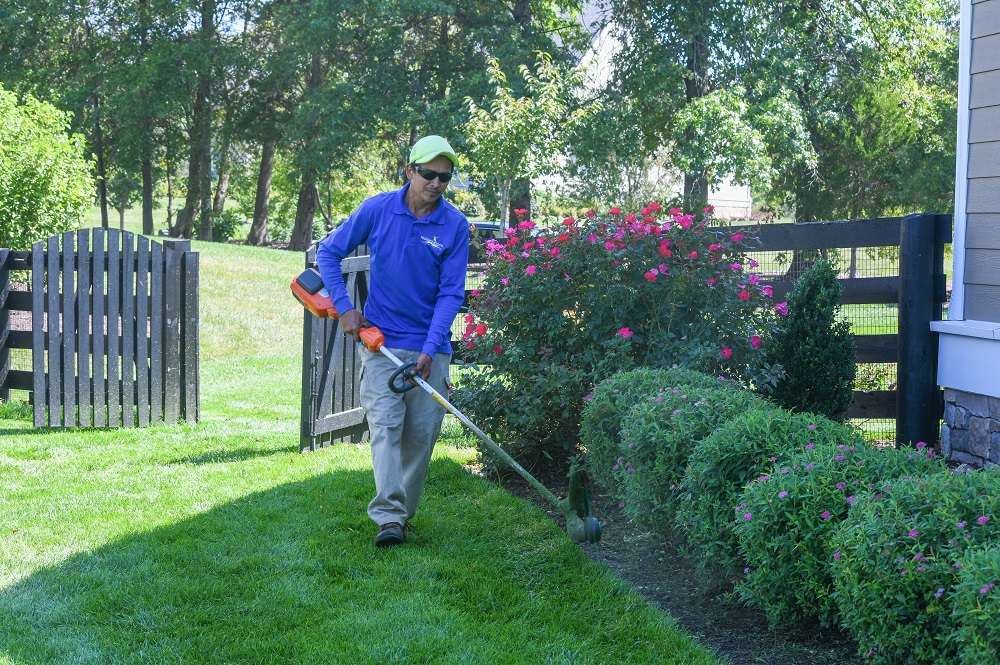
Fall offers a window to fix what summer revealed. Convert those last bits of hand-trimmed turf around signs. Re-establish edges with a steel spade where string trimmers carved scallops. Overseed tall fescue pockets under trees, and verify controller schedules switch over from summer cycles.
Communication that keeps expectations aligned
Even the best office landscaping services can founder if the property manager and crew leaders do not share the same picture of success. Weekly photos from the same three vantage points help. A short note that explains why mowing will stretch to nine days during a hot, dry week sets expectations. When the team plans aeration or a pre-emergent application, post signage that explains the benefit in plain language. Tenants who understand the why are less likely to request counterproductive changes.
During the first month of a new contract, a 30-minute walk with the decision maker pays off. Point out the areas where turf will never thrive, propose the smallest viable conversion, and put a date and cost on it. Many corporate property landscaping budgets have a contingency bucket for exactly this kind of fix, and spending it early prevents more expensive reactions later.
Where synthetic turf fits, and where it does not
Artificial turf has a place, but it is smaller than the brochures suggest. In Riverdale’s heat, some synthetics run hot enough to be uncomfortable by midday. The right place is a small, shaded amenity zone where consistent green matters more than touch, or where narrow slices of natural turf have failed repeatedly, like a 2-foot strip between a walkway and a building. Use a permeable base that respects stormwater flow, and commit to quarterly sanitation and grooming. It is not no-maintenance, it is different maintenance.
Avoid synthetic turf on large sun-exposed panels. It looks tired in a year, and the heat load can impact nearby plantings and reflected temperatures at entries.
Measuring what matters
For corporate grounds maintenance, the metrics that matter are not just mow counts. Track complaint volume by month, water consumption against degree days, and labor hours per acre. Healthy low-maintenance programs see complaints fall into a narrow band after the first two months, water use declines 20 to 30 percent over legacy schedules, and labor hours stabilize even during peak growth because trimming and rework drop.
Take quarterly soil compaction readings at the same five locations. If the numbers creep up, move aeration earlier or add a pass to the problem zone only. Data replaces hunches, and the property benefits.
A concise checklist for Riverdale office turf success
- Match turf to sun, shade, and traffic: Bermuda for sun and wear, zoysia for refined look and partial shade, fescue for persistent shade. Fix the soil first: decompact, amend selectively, and set clean drainage paths. Tune irrigation to soil and season with cycle-and-soak and matched precipitation. Edge out maintenance traps: convert slivers around fixtures to beds or stone. Anchor budgets to growth cycles and build in small, tactical improvements.
Bringing it all together on a working campus
The best managed campus landscaping reads effortless, but it is the product of dozens of choices that reduce friction. A property manager can walk from a front entry through a plaza to a parking lot and never think about mowing height, soil compaction, or nozzle precipitation rates. Visitors notice the absence of weeds and the fact that their shoes stay clean after a storm. Crews hit the site with a plan that respects the season, not the calendar.
Riverdale rewards those who design and manage with its soil, heat, and microclimates in mind. Low-maintenance turf is not a shortcut, it is a strategy. Choose a grass that fits the sun. Prepare the soil so roots can breathe. Water with intention. Trim where it adds value and avoid trimming where design can remove the need. Align the corporate maintenance contracts with what the grass will do, not what spreadsheets did last year.
Do that, and your commercial office landscaping not only looks good on opening day, it still looks good three summers in, with fewer surprises, fewer emergency calls, and a grounds team that spends more time improving and less time chasing problems. That is the quiet advantage that keeps tenants happy and properties competitive in a market where first impressions start at the curb.